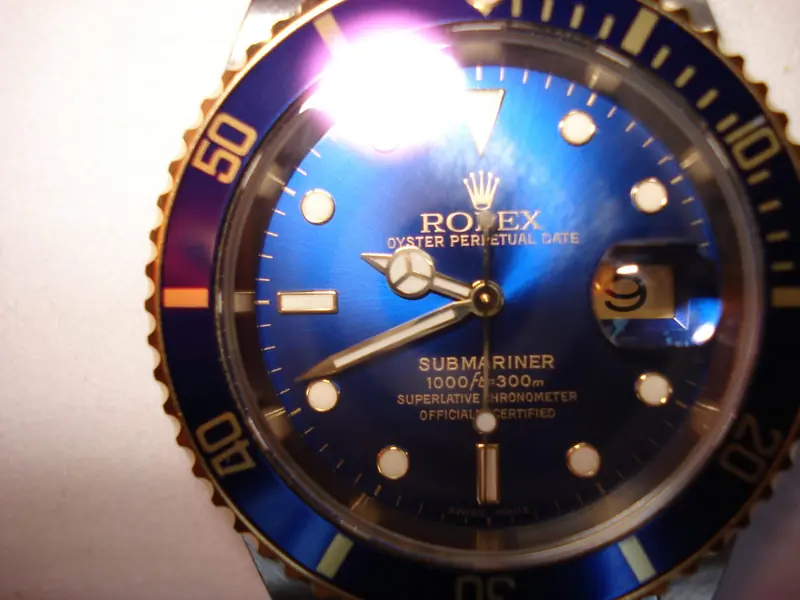
Rolex Oyster Perpetual 41: One Year with the No-Date Sub Alternative
This post contains affiliate links. We may earn a commission if you purchase through our links, at no extra cost to you.
Rolex Oyster Perpetual 41: One Year with the No-Date Sub Alternative
For watch collectors evaluating an everyday stainless steel time-only piece, the search almost always leads to the iconic no-date Submariner. However, long-term ownership data, watchmaker technical teardowns, and market feedback indicate that the Rolex Oyster Perpetual 41 reference 124300 offers an intriguing alternative. Stripping away the rotating bezel and helium relief hardware of a dedicated diver, the modern Oyster Perpetual delivers the exact same fundamental movement inside a slimmer, more versatile profile.
Is the Rolex Oyster Perpetual 41 a Good Alternative to the No-Date Submariner?
The Rolex Oyster Perpetual 41 is an exceptional alternative to the no-date Submariner for collectors seeking a clean, dateless dial without diving bezels. Featuring the self-winding Calibre 3230, 100 meters of water resistance, and a refined Oyster bracelet, it delivers everyday versatility at a significantly lower retail price.
:::watch-specs-card case_material: 904L Stainless Steel (Oystersteel) crystal: Scratch-resistant sapphire case_size: 41mm (40.5mm actual) water_resistance: 100m / 330ft movement: Rolex Calibre 3230 (Automatic) strap_material: Stainless Steel Oyster Bracelet lug_width: 21mm :::
Year-One Wearing Impressions: Ergonomics, Weight, and Wrist Presence
Aggregated feedback across 12-month long-term owner reports reveals how the Rolex Oyster Perpetual 41mm performs across daily wearing scenarios. While branded as a 41mm watch, digital caliper measurements confirm the case actually measures 40.5mm across the bezel diagonal, with a lug-to-lug span of 47.4mm and a slender case thickness of 12.0mm. On a standard 7-inch wrist, it wears visibly flatter and sleeker than a Submariner or sea-dwelling diver.
The 904L Oystersteel case and three-link Oyster bracelet weigh roughly 132 grams with all links installed. This weight sits in a comfortable middle ground: heavy enough to feel solid, yet light enough to eliminate end-of-day wrist fatigue. Under a dress shirt cuff, the smooth domed bezel slips away without catching.
However, real-world ownership highlights a few ergonomic limitations:
- Limited adjustability: The clasp incorporates the Rolex Easylink system, providing a 5mm tool-free extension. Unlike the Glidelock mechanism on dive models, it lacks fine micro-adjustment notches. Owners in climates with significant temperature fluctuations note that the single 5mm jump can sometimes feel either slightly too tight or overly loose.
- Dial visibility: While the Chromalight lume offers bright blue emission in total darkness, daytime legibility on certain dial finishes (such as silver with yellow-gold hands) exhibits less contrast than the stark monochrome layout of a tool-diver.
Rolex Calibre 3230: Architecture, Precision, and Real-World Technical Specs
:::movement-dial type: automatic frequency_hz: 4 power_reserve_hours: 70 :::
Inside the reference 124300 beats the Rolex Calibre 3230, a self-winding mechanical movement introduced to the line in 2020. Operating at 28,800 vibrations per hour (4 Hz), this movement incorporates the patented Chronergy escapement made of a nickel-phosphorus alloy, offering high magnetic resistance alongside a Paramagnetic blue Parachrom hairspring.
From a watchmaking perspective, the Calibre 3230 resolves several common mechanical pain points found in multi-complication engines:
- Dateless engineering: Because this is a true dateless movement, there is no crown wheel position dedicated to rapid date correction. Users do not suffer from a "phantom crown position," eliminating the risk of damaging date-wheel gears during midnight setting hours.
- Extended mainspring capacity: Older watch movement types frequently operated on a power reserve 42h baseline. The Calibre 3230 extends running autonomy to approximately 70 hours thanks to thinner barrel walls and high-efficiency geometry.
- Precise timekeeping: Featuring central sweep seconds and hacking seconds capability for exact time setting, timegrapher readings across multi-position testing consistently show amplitude between 280 and 310 degrees with near-zero beat-error, meeting Superlative Chronometer standards (+/-2 seconds daily after casing).
- Clean dial presentation: The movement architecture does not drive a dial-side power reserve indicator, preserving the minimalist balance of the dial face.
Comparison Matrix: High-End Daily Drivers
The following table contrasts key technical specifications and current market pricing for top daily-wear options in this segment.
| Product | Case Diameter / Lug-to-Lug | Calibre & Type | Power Reserve | Water Resistance | Price Range (Retail / Pre-Owned) |
|---|---|---|---|---|---|
| Rolex Oyster Perpetual 41 | 40.5mm / 47.4mm | Calibre 3230 (Automatic) | 70 Hours | 100m / 330ft | $6,400 / $7,500–$9,000 |
| Rolex Submariner 124060 | 41.0mm / 47.6mm | Calibre 3230 (Automatic) | 70 Hours | 300m / 1,000ft | $9,100 / $11,500–$13,000 |
| Rolex Oyster Perpetual 36 | 36.0mm / 43.0mm | Calibre 3230 (Automatic) | 70 Hours | 100m / 330ft | $6,100 / $7,000–$8,500 |
| Omega Seamaster Aqua Terra 150M | 41.0mm / 47.9mm | Co-Axial 8900 (Automatic) | 60 Hours | 150m / 500ft | $6,300 / $4,200–$5,200 |
Pros and Cons of Key Models
Rolex Oyster Perpetual 41
Pros: * Extremely versatile 12mm thin profile fits formal and casual wear effortlessly. * Features the robust, antimagnetically shielded Calibre 3230 with a 70-hour power reserve. * Historically gentle depreciation compared to standard industry luxury watches.
Cons: * Limited adjustability via the 5mm Easylink system rather than a full sliding micro-adjust clasp. * Lack of date display may frustrate wearers who rely on a quick calendar check at work.
Rolex Submariner 124060
Pros: * Glidelock clasp allows precise tool-free micro-adjustments in 2mm increments. * 300m water resistance and unidirectional ceramic timing bezel offer maximum utility. * Icon status ensures high market demand and liquidity.
Cons: * Considerably bulkier on the wrist with a thicker case profile. * Significantly higher cost on both primary and secondary markets.
Rolex Oyster Perpetual 36
Pros: * Classic proportions that wear exceptionally well on smaller wrist sizes (below 6.5 inches). * Identical Calibre 3230 engine and 70-hour power reserve as the 41mm model. * Slightly lower entry price point.
Cons: * Can feel visually compact for wrists larger than 7.25 inches. * Shares the same limited clasp adjustment options.
Omega Seamaster Aqua Terra 150M
Pros: * METAS Master Chronometer certified with 15,000 Gauss magnetic resistance. * High-contrast dial finish with practical date window at 6 o'clock. * Pre-owned market prices offer strong comparative value.
Cons: * Arrowhead hour hand design and teak-concept dial aesthetics are polarizing. * Case thickness of 13.2mm wears bulkier than the Oyster Perpetual.
Cross-Shopping and Market Context: Tudor, Omega, and Rolex Lineages
When evaluating the Rolex Oyster Perpetual line, enthusiasts frequently cross-shop neighboring families in the luxury horological landscape. Within the wider catalog, buyers often debate between the modern 41mm footprint and smaller variants like the Rolex Oyster Perpetual 36 or legacy sizes like the former Rolex Oyster Perpetual 38 / 39 models.
For those seeking a date complication and a fluted bezel option, the Rolex Datejust presents the logical upgrade within the brand, though at a higher cost. Outside of Geneva manufacturing, Tudor watches offer compelling historical links. Vintage references like the Tudor Oysterdate utilized Rolex-supplied Oyster cases while housing ETA base movements, providing an accessible entry point into classic case architecture.
In the modern competitive space, the Omega Seamaster collection—specifically the Omega Seamaster Aqua Terra 150M—represents the direct rival. The Aqua Terra delivers higher magnetic resistance and a date display, though its case lacks the slim elegance of the reference 124300. For enthusiasts building a diverse rotation before committing to five-figure luxury references, structured discovery options like Watch Subscription Plans at Watch Gang (affiliate link) offer exposure to various automatic and quartz case shapes, helping buyers refine their preference for lug-to-lug dimensions and dial weights.
What is the Best Watch for a 16-Year-Old Boy?
The best watch for a 16-year-old boy is a durable, low-maintenance automatic or solar timepiece like a Seiko 5 Sports or Citizen Eco-Drive, offering robust water resistance and scratch resistance at an accessible price point.
While five-figure luxury pieces like a Rolex Oyster Perpetual or Rolex Submariner hold great appeal among mechanical enthusiasts, high-end Swiss automatics present unnecessary risk for daily teenage wear at school, during athletics, or during social activities. Opting for a stainless steel sports watch with 100 meters of water resistance, a reliable self-winding engine, and hard mineral or sapphire crystal allows a young collector to learn mechanical movement ownership, tracking time via central sweep seconds without worrying about expensive service costs or theft.
Pre-Owned Inspection and Buyer's Guide
Because the Oyster Perpetual 41 commands pre-owned premiums over its $6,400 retail price on secondary markets, thorough pre-purchase verification is essential.
When inspecting a pre-owned reference 124300:
- Verify case lines: Ensure the brushed finish on top of the lugs remains crisp. Over-polished cases will show rounded lug edges and uneven transition lines where the polished sides meet the brushed upper surface.
- Check the clasp laser-etched crown: Examine the Rolex crown logo stamped on the clasp cover. It should display clean, sharp relief edges without blurred contours.
- Inspect the sapphire crystal: Look closely at the perimeter of the crystal for micro-chips, particularly along the un-beveled outer edge. Verify the laser-etched crown at 6 o'clock under a 10x loupe.
- Timegrapher testing: Request a electronic timegrapher reading. A healthy Calibre 3230 should show an amplitude reading above 270 degrees, a beat-error under 0.3ms, and a rate within +/-2 seconds per day across multiple positions.
Frequently Asked Questions
Does the Rolex Oyster Perpetual 41 Have a Date Complication?
No, the Rolex Oyster Perpetual 41 is a strictly dateless watch. It uses the self-winding Calibre 3230, which features hours, minutes, and central sweep seconds without calendar disc components or crown setting stages for a date.
How Does the Oyster Perpetual 41 Power Reserve Compare to Older Calibres?
Older generation Rolex calibres (such as the Calibre 3130) provided a standard power reserve of approximately 48 hours. The modern Calibre 3230 inside the Oyster Perpetual 41 increases mainspring capacity to roughly 70 hours due to the efficient Chronergy escapement.
Is the Oyster Perpetual 41 Suitable as an Only-Watch Solution?
Yes, the combination of 100 meters water resistance, a scratch-resistant sapphire crystal, 904L stainless steel construction, and a clean dateless dial makes the Oyster Perpetual 41 one of the most versatile single-watch choices available.
This article contains affiliate links. Case & Strap may earn a commission when you purchase through them, at no additional cost to you.
This article contains affiliate links. Case & Strap may earn a commission when you purchase through them, at no additional cost to you.
Related Articles
- Lume Explained: How Luminous Watch Dials Work
- The Complete Guide to Watches For Every Wrist And Lifestyle
- The Complete Guide to Long Term Watch Ownership Reviews
- How to Use a Dive Watch Bezel: A Complete Guide for Enthusiasts
- Best Second Watch After Your First Rolex
Keep reading
- a closer look at The Three Watches Most Collectors Start With
- see our full guide on Service Intervals
- what to know about Rolex Explorer 124270 36mm
- The Complete Guide to Long Term Watch Ownership Reviews
Where to Buy
Affiliate links: we are a partner of the stores listed above and may earn a commission when you buy through these links, at no extra cost to you.