Magnetism and Mechanical Watches: What Causes It and What to Do
Magnetism and Mechanical Watches: What Causes It and What to Do
This post contains affiliate links. We may earn a commission if you purchase through our links, at no extra cost to you. As an Amazon Associate, I earn from qualifying purchases.
Your mechanical watch gained six minutes between breakfast and dinner. The date still changes, the seconds hand still moves, and nothing looks broken. Magnetism is one possible cause, especially if the watch recently sat beside a magnetic phone mount, a tablet cover, or a speaker. It is also easy to mistake for a problem that needs a different repair.
This guide explains how to check the symptom before spending money and how four currently sold watches differ if magnetic exposure is part of your daily routine. It draws on published specifications and movement behavior; it is not a hands-on test.
What should you do if your mechanical watch becomes magnetized?
Magnetism often makes a mechanical watch run fast because the hairspring’s coils stick together, shortening its effective length. Move the watch away from the suspected source, measure its timekeeping over a full day, and ask a watchmaker to demagnetize it if the gain persists. Demagnetization cannot fix mechanical damage.
The five factors that matter
1. What changed in its timekeeping?
A watch that suddenly gains minutes per day, after previously keeping reasonably steady time, is a stronger magnetism candidate than one that has always gained 15 seconds a day. Magnetism can produce erratic results too, so the symptom alone is not a diagnosis. A weak mainspring, a knock, poor regulation, or movement wear can also affect accuracy.
Set the watch against a reliable time reference and record the difference now and again roughly 24 hours later. Wind a hand-wound watch according to its instructions first. For an automatic, make sure it has had enough running time or manual winding to rule out low power. Take a second reading on another day if the first is ambiguous. A watchmaker can check magnetism directly and use a timing machine to look at rate and amplitude.
A day or date that fails to change reliably points toward a calendar or power issue rather than magnetism alone. Avoid forcing a quick-set day or date during the movement’s calendar-change period; consult the model’s instructions for its restricted hours.
2. Which part of the movement is exposed?
The hairspring governs the balance wheel’s oscillation. When magnetic attraction pulls its coils together, the effective spring becomes shorter and the balance usually runs faster. The effect can be dramatic even when the case, hands, and dial look normal.
Watch history offers several responses to this problem. Some designs shield a conventional movement with a soft-iron inner case. Others use less magnetically susceptible components, such as a silicon hairspring, or build and test the movement and watch to a stated resistance level. A silicon spring is useful, but its presence alone is not a whole-watch resistance rating. Read the exact claim for the exact reference you are buying.
3. How strong is the published claim?
Magnetic-field ratings are often quoted in gauss or A/m. For a buyer, the useful distinction is between a watch with no stated whole-watch rating and one tested to a named level. The Omega Seamaster Aqua Terra 150M Master Chronometer 220.10.41.21.03.001 carries a stated resistance to magnetic fields of 15,000 gauss. The Tissot Gentleman Powermatic 80 Silicium T127.407.11.041.00 has a silicon balance spring, but that specification should not be read as the same 15,000-gauss claim.
There is no need to calculate a field strength for every object on your desk. Distance is the practical control: do not store a mechanical watch against a magnetic clasp, charging accessory, speaker, or tool. If exposure is frequent and unavoidable, a published whole-watch rating gives you a clearer basis for choosing than a vague “anti-magnetic” description.
4. Does the watch fit the rest of your day?
Magnetic resistance does not replace water resistance, power reserve, or a case that fits. Water ratings describe pressure under specified conditions, not a promise that a watch can be taken to the printed depth in every circumstance. Everyday atmospheric pressure is roughly 1 bar; a watch marked 5 bar/50 m or 10 bar/100 m has a separate rated water-resistance limit. Gaskets and crown condition matter, particularly on a used watch.
Power reserve matters when you rotate watches. The Seiko 5 Sports SRPD55 has a stated reserve of about 41 hours; the Hamilton Khaki Field Mechanical H69439931 and Tissot Gentleman Powermatic 80 Silicium T127.407.11.041.00 each state 80 hours. A longer reserve may save you resetting the time and date after a weekend off the wrist. It does not make the watch more resistant to a magnetic field.
5. What will diagnosis and repair cost?
Demagnetization is generally a brief watchmaker’s procedure. Ask for a rate check before and after it, so you can see whether it addressed the complaint. If the watch remains far outside its expected performance, the next step is diagnosis, not repeated demagnetization. Regulation, a damaged hairspring, and a calendar fault are different jobs.
A phone compass app is not a reliable pass-or-fail test for a watch movement. Nor should you open a water-resistant case to investigate: opening it creates a gasket and pressure-testing question as well as a repair question. If the watch is under warranty, ask the seller or manufacturer about the proper service route before arranging independent work.
Four watches to compare
These are four different buying choices, from an accessible automatic to a watch with a quantified magnetic-resistance claim. The dimensions and reserves below are published figures, not measurements from wear tests. New prices change by region and retailer, so confirm the current price for the exact reference before ordering.
| Product | Key published specs | Magnetic design |
|---|---|---|
| Seiko 5 Sports SRPD55 | 42.5 mm steel case; automatic 4R36; about 41-hour reserve; 100 m water resistance | No 15,000-gauss whole-watch claim |
| Hamilton Khaki Field Mechanical H69439931 | 38 mm steel case; hand-wound H-50; 80-hour reserve; 50 m water resistance | Check the exact reference’s published resistance claim |
| Tissot Gentleman Powermatic 80 Silicium T127.407.11.041.00 | 40 mm steel case; automatic Powermatic 80; 80-hour reserve; 100 m water resistance | Silicon balance spring |
| Omega Seamaster Aqua Terra 150M Master Chronometer 220.10.41.21.03.001 | 41 mm steel case; automatic calibre 8900; 60-hour reserve; 150 m water resistance | Stated resistance to 15,000 gauss |
Seiko 5 Sports SRPD55: the accessible automatic
The Seiko 5 Sports SRPD55 is a sensible starting point if you want to learn what normal automatic-watch behavior looks like without paying for a specialist magnetic-resistance claim. Its 4R36 movement provides hacking seconds, hand winding, and a day-date display. The 42.5 mm case is the largest listed here, so check its fit on your wrist rather than assuming “entry level” means small.
Its 100 m water rating is useful for ordinary daily wear when the seals and crown are in good condition. Its roughly 41-hour reserve means a weekend away from the wrist can stop it, requiring a time and day-date reset. If the watch suddenly starts gaining several minutes daily, have that change diagnosed; the price of the watch is no reason to accept faulty timekeeping. Watch Gang’s selection changes, so confirm the reference before purchasing a Seiko 5 Sports SRPD55 at Watch Gang.
Wins: Accessible automatic movement, day-date display, and a useful published water rating. Compromises: Shorter reserve than the Hamilton and Tissot here, a larger case, and no comparable quantified whole-watch magnetic claim.
Hamilton Khaki Field Mechanical H69439931: the smaller hand-wound choice
The Hamilton Khaki Field Mechanical H69439931 gives you a 38 mm steel field-watch case and the deliberate routine of winding its H-50 movement. Its stated 80-hour reserve is generous for a hand-wound watch: missing a day of winding need not mean it stops. The trade-off is a 50 m water rating, which warrants more care around water than the higher-rated watches in this table.
This is a purchase for someone who wants the feel and legibility of a mechanical field watch, not someone seeking a published 15,000-gauss guarantee. If your job repeatedly puts your wrist close to magnetic equipment, verify the exact reference’s manufacturer specifications before treating the movement as protected.
Wins: Smaller case, clear field-watch purpose, and long stated reserve. Compromises: Manual winding, lower water rating than the other three, and no comparable quantified whole-watch claim cited here.
Tissot Gentleman Powermatic 80 Silicium T127.407.11.041.00: the balanced daily wearer
The Tissot Gentleman Powermatic 80 Silicium T127.407.11.041.00 combines a 40 mm steel case, 100 m water resistance, and an 80-hour reserve. Its silicon balance spring is directly relevant to a guide about magnetism. It is a useful feature if you want one automatic watch for work and weekends, while keeping expectations tied to what Tissot states for this reference.
The key compromise is precision of the claim. “Silicium” identifies a component; it does not tell you that the complete watch meets Omega’s stated 15,000-gauss level. If a measured resistance threshold is the deciding feature, compare the published whole-watch specifications rather than the material names.
Wins: Versatile size, long reserve, 100 m rating, and a silicon balance spring. Compromises: The component specification is less informative than a stated whole-watch field rating for a buyer with known magnetic exposure.
Omega Seamaster Aqua Terra 150M Master Chronometer 220.10.41.21.03.001: the quantified option
The Omega Seamaster Aqua Terra 150M Master Chronometer 220.10.41.21.03.001 is the clearest choice in this group when magnetic resistance is the purchasing reason. Omega states resistance to 15,000 gauss for the watch. The steel 41 mm case, 150 m water rating, and 60-hour reserve also make it a capable daily watch on paper.
It is a substantially more expensive solution than asking a watchmaker to demagnetize a watch after an occasional incident. Buy it because you want this watch and its published capabilities, not because one episode of fast timekeeping proves every ordinary mechanical watch will fail in your routine. Its size and cost are real compromises even when the technical case is strong.
Wins: Explicit high magnetic-resistance claim and the highest water rating in this comparison. Compromises: Higher purchase and service costs, and a shorter stated reserve than the Hamilton and Tissot.
What to skip
Skip a listing that says only “anti-magnetic” without identifying the exact model or explaining the claim. The term can refer to a component, a case construction, or a test threshold. Those are materially different pieces of buying information.
Skip paying for a replacement watch before checking a sudden rate change. If magnetism is the cause, demagnetization may resolve it; if the rate does not improve, a watchmaker can investigate the movement. A sale listing cannot diagnose the watch you already own.
Skip choosing a model by one specification while ignoring how you wear it. A Seiko 5 Sports SRPD55 or Tissot Gentleman Powermatic 80 Silicium T127.407.11.041.00 may suit a routine that includes water better than a 50 m field watch. If you are deciding which style belongs on your wrist every day, the companion guides Tool Watch or Dress Watch: Choosing Your Daily Driver and Tool Watch vs. Dress Watch: Choosing the Daily Driver address that choice separately.
Buying advice
For occasional exposure to magnetic accessories, start with storage habits and a clear record of your watch’s rate. The Seiko 5 Sports SRPD55 is a reasonable lower-cost automatic if its size fits; the Hamilton Khaki Field Mechanical H69439931 makes sense if you prefer a smaller, hand-wound field watch. Choose the Tissot Gentleman Powermatic 80 Silicium T127.407.11.041.00 when its silicon spring, longer reserve, and versatile case are worth the extra spend to you. Choose the Omega Seamaster Aqua Terra 150M Master Chronometer 220.10.41.21.03.001 when you specifically want a stated whole-watch resistance threshold.
Compare the full reference on the dial-side listing, caseback paperwork, and manufacturer specification before buying. On a pre-owned example, request a recent timing result and evidence of service where available. Ask whether its water resistance has been pressure-tested if you intend to use it around water. A day-date display that does not advance correctly is a separate issue to raise with the seller.
Other familiar alternatives help define the boundary of this guide. The Tissot Le Locle is a dressier cross-shop; the Orient Ray II is a sport-watch comparison. The Citizen BM8475 and Casio G-Shock are alternatives for buyers willing to leave mechanical movements behind. Compare their exact references and movement types before carrying a claim about one watch over to another.
FAQ
Can a magnetized watch be permanently damaged?
Magnetization often causes a reversible change in rate, but a fast-running watch has not necessarily been magnetized. If its rate stays poor after professional demagnetization, have the movement checked for another fault.
Will a watch run slow instead of fast?
It can behave erratically, although a sudden large gain is the familiar sign of hairspring coils attracting one another. Measure the rate rather than deciding from a single glance at the dial.
Does water resistance protect against magnetism?
No. A 100 m or 150 m water rating concerns pressure and sealing. Magnetic resistance concerns the movement and the watch’s construction. Neither rating substitutes for the other.
Why did my day or date stop changing correctly?
Low power or a calendar fault may be responsible. Record when the change occurs and tell a watchmaker about any recent manual date adjustment. Demagnetization should not be assumed to repair the calendar mechanism.
Should I buy a demagnetizer for home use?
For a single incident, a watchmaker’s diagnosis is usually more useful: you get a rate check and can find out whether magnetism was actually the problem. Keep electronic watches and other sensitive items away from an operating demagnetizer.
This article contains affiliate links. Case & Strap may earn a commission when you purchase through them, at no additional cost to you.
This article contains affiliate links. Case & Strap may earn a commission when you purchase through them, at no additional cost to you.
Related Articles
- The Best Beginner Automatic Watches in 2026: An Honest, Hands-On Buyer's Guide
- Best Field Watches That Aren’t the Hamilton Khaki
- The Best Skeleton Watches Under $1,000: An Enthusiast’s Guide to Mechanical Transparency
- The Best Sapphire Crystal Watches Under $500: A Hands-On Buyer's Guide
- Best Vintage Watches to Start Your Collection in 2026
Keep reading
- our notes on Tool Watch or Dress Watch
- What Actually Determines Watch Resale Value, explained
- a closer look at Tool Watch vs. Dress Watch
Where to Buy
- Seiko 5 Sports SRPD55 on Amazon
- Hamilton Khaki Field Mechanical H69439931 on Amazon
- Tissot Gentleman Powermatic 80 Silicium T127.407.11.041.00 on Amazon
- Omega Seamaster Aqua Terra 150M Master Chronometer 220.10.41.21.03.001 on Amazon
- Watch Gang
Affiliate links: as an Amazon Associate and partner of the stores above we earn from qualifying purchases.
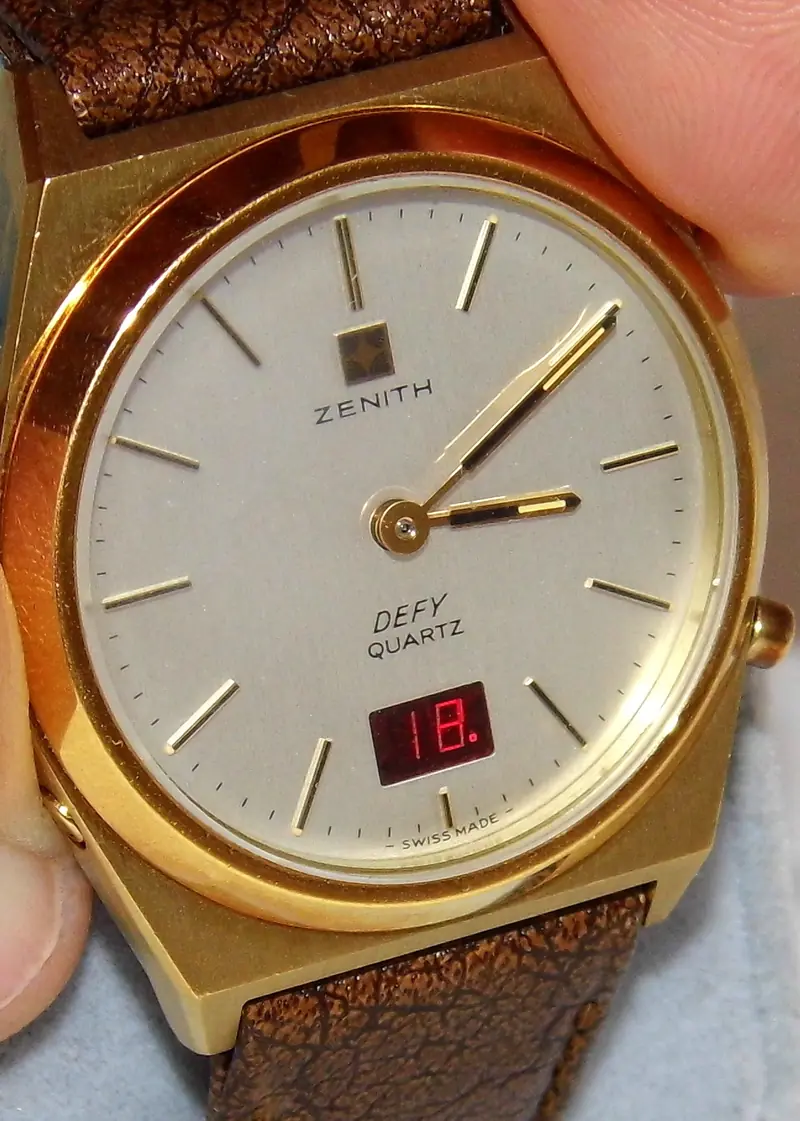
Image credit: photo by Joe Haupt from USA via Wikimedia Commons, licensed CC BY-SA 2.0.
