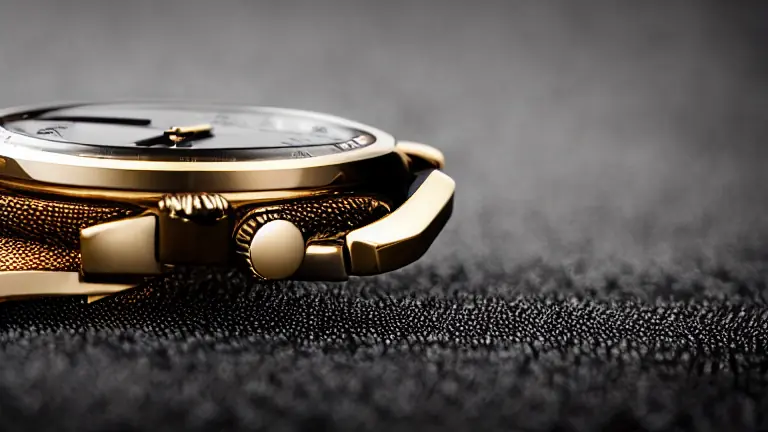
The Complete Guide to Integrated Bracelet Watches
The Complete Guide to Integrated Bracelet Watches
This post contains affiliate links. We may earn a commission if you purchase through our links, at no extra cost to you. As an Amazon Associate, I earn from qualifying purchases.
Integrated bracelet watches occupy a unique position in modern horology. Blending the structural rigidity of a sports watch with the tailored aesthetic of early luxury design, these timepieces feature bracelets designed specifically to flow directly into the case architecture without traditional lug horns or standard spring bar attachments.
What Is an Integrated Bracelet Watch?
An integrated bracelet watch features a case and bracelet designed as a single continuous unit, omitting traditional lug holes. The bracelet links flow directly into the case silhouette, creating a seamless aesthetic that delivers distinct wrist presence and balanced ergonomics across daily wear.
| Watch Model | Case Diameter | Case Thickness | Water Resistance | Movement | Price Range |
|---|---|---|---|---|---|
| Tissot PRX Powermatic 80 | 40.0mm | 10.9mm | 100m (10 bar) | Powermatic 80.111 | $675 – $725 |
| Christopher Ward The Twelve | 40.0mm | 9.95mm | 100m (10 bar) | Sellita SW200-1 | $1,225 – $1,895 |
| IWC Ingenieur Automatic 40 | 40.0mm | 10.7mm | 100m (10 bar) | IWC Calibre 32111 | $11,700 – $14,600 |
| Vacheron Constantin Overseas Automatic | 41.0mm | 11.0mm | 150m (15 bar) | VC Calibre 5100 | $25,000 – $30,000 |
| Audemars Piguet Royal Oak Selfwinding | 41.0mm | 10.5mm | 50m (5 bar) | AP Calibre 4302 | $27,000 – $35,000+ |
Key Factors That Define Integrated Bracelet Design
When evaluating integrated bracelet watches, standard watch-buying criteria like movement accuracy and dial legibility must be weighed alongside distinct structural factors. Because the case and bracelet form a single cohesive assembly, tiny variations in tolerance and finishing dramatically affect how the watch feels and wears on the wrist.
:::watch-specs-card
case_material: 316L Stainless Steel
crystal: Sapphire Crystal with Anti-Reflective Coating
case_size: 40.0mm
water_resistance: 100m / 10 bar
movement: Powermatic 80.111
strap_material: Integrated Stainless Steel Bracelet
lug_width: Integrated (Custom Fitting)
:::
Case Thickness and Wrist Profile
Because integrated bracelets lack standard spring bars, the first link articulates directly from the edge of the case. A slim case thickness—typically under 11.5mm—allows the watch head to sit low against the wrist, enabling the first bracelet links to drop naturally over the wrist bones. When a case exceeds 13mm in thickness on an integrated design, the watch can flare outward at the lug junction, artificially widening the Effective lug-to-lug span and causing the watch to ride top-heavy.
Bracelet Taper Width and Articulation
High-grade integrated bracelets rely on precise engineering where the width tapers down from the widest point at the case junction to a narrower footprint at the clasp. For instance, a 40mm case might feature an initial integrated link width of 24mm that tapers down to 18mm at the buckle. This drop in width improves articulation, reduces weight, and prevents the bracelet from feeling blocky or restrictive.
:::movement-dial
type: automatic
frequency_hz: 3.0
power_reserve_hours: 80
:::
Micro-Adjustment Capability and Sizing Solutions
Sizing an integrated bracelet requires precise tolerance control. Traditional straps allow infinite hole adjustment, and conventional watch bracelets often feature multi-position spring bar micro-adjustments inside the clasp. Integrated designs, however, frequently employ butterfly clasps to keep the profile low under dress cuffs. Butterfly clasps lack built-in micro-adjustments, leaving wearers reliant on half-links. Advanced modern options integrate push-button clasp micro-adjustment systems or quick-release bracelet mechanisms to allow on-the-fly adjustment as wrist size fluctuates throughout the day.
Surface Finishing Techniques
The defining visual element of integrated design is how light moves seamlessly across the metal from case head to clasp. Watchmakers achieve this effect using combined surface finishing techniques. Linear vertical or sunburst satin brushing across the flat surfaces of the case and links is contrasted by polished bevels along the chamfered edges. High-end executions require extensive hand-finishing so that every chamfer aligns perfectly from link to link.
5 Top Integrated Bracelet Watch Picks
To help guide your search, we compared published specifications, production tolerances, and aggregated owner reviews across multiple enthusiast platforms. Here is how the leading integrated bracelet models stack up across price brackets.
1. Tissot PRX Powermatic 80 (Ref. T137.407.11.041.00)
The Tissot PRX Powermatic 80 stands out as one of the most compelling value propositions in modern horology. Reinterpreting an original Tissot design from 1978, the PRX features a sharp tonneau-shaped 316L stainless steel case measuring 40.0mm in diameter, 10.9mm in thickness, and 44.0mm from tip to tip across the solid end-junctions.
Inside sits the Swatch Group’s automatic Calibre Powermatic 80.111, operating at a frequency of 3.0 Hz (21,600 vph) with a free-sprung Nivachron hairspring and an 80-hour power reserve. The integrated single-link bracelet tapers dramatically toward a stamped butterfly clasp with dual push-button release.
- Wins: Excellent 80-hour power reserve; anti-magnetic Nivachron balance spring; crisp alternating brushed and polished case finishing at an accessible price point; integrated quick-release bracelet mechanisms for easy strap changes.
- Compromises: The butterfly clasp lacks a micro-adjustment system, forcing users to rely solely on half-links for sizing; the 40mm model wears larger than its diameter suggests due to the rigid first link connection.
2. Christopher Ward The Twelve (Ref. C12-40ADA1-S00B0-B0)
Launched to cater to enthusiasts wanting upper-tier finishing in a mid-tier price bracket, Christopher Ward The Twelve features a 40.0mm stainless steel case with a dodecagonal (12-sided) outer bezel and an ultra-thin profile of just 9.95mm. The lug-to-lug measurement comes in at a compact 44.5mm.
The watch is powered by the Swiss Sellita SW200-1 automatic calibre, operating at 4.0 Hz (28,800 vph) with a 38-hour power reserve and hacking seconds. Its integrated bracelet features sharp single-link geometry with polished chamfers on every surface edge, secured by a sleek butterfly clasp.
- Wins: Remarkably thin 9.95mm case height slides effortlessly under shirt cuffs; exceptional multi-angled case finishing; screw-down crown supporting a full 100m water resistance rating; high-beat 28,800 vph sweep second hand.
- Compromises: The 38-hour power reserve requires frequent winding if rotated in a multi-watch collection; butterfly clasp provides no micro-adjustment capability.
3. IWC Ingenieur Automatic 40 (Ref. IW328901)
Relaunched to honor Gérald Genta watch designs from the late 1970s—specifically the legendary Ingenieur SL Reference 1832—the IWC Ingenieur Automatic 40 returns to pure engineering roots. The 40.0mm stainless steel case measures 10.7mm thick and features a soft-iron inner case for protection against magnetic fields.
The watch relies on the in-house IWC Calibre 32111 automatic movement, which operates at 4.0 Hz (28,800 vph) and provides a robust 120-hour (5-day) power reserve. The bracelet uses a closed H-link structure with polished center links, attached to a refined folding clasp with built-in micro-adjustment.
- Wins: Heritage-rich design derived from Gérald Genta's original work; 120-hour power reserve; soft-iron inner cage protecting against high magnetic fields; superb micro-adjustment clasp ergonomics.
- Compromises: Premium pricing relative to standard stainless steel sports automatics; lack of quick-release strap mechanisms limits swift strap changes without dedicated pin tools.
4. Vacheron Constantin Overseas Automatic (Ref. 4500V/110A-B128)
Representing high-artisan horology born from 1970s luxury sports watch history, the Vacheron Constantin Overseas Automatic ref. 4500V features a 41.0mm stainless steel case, 11.0mm thickness, and a hallmark six-sided bezel inspired by the Maltese cross.
The watch is powered by the in-house Calibre 5100, carrying the prestigious Hallmarks of Geneva (Poinçon de Genève) certification. It operates at 4.0 Hz (28,800 vph) with a twin-barrel 60-hour power reserve. The integrated bracelet mirrors the Maltese cross motif in its link geometry and features an ingenious quick-release system alongside micro-adjustment extensions built directly into both sides of the dual-blade folding clasp.
- Wins: Geneva Seal movement finishing with a 22k gold rotor; tool-free quick-release system includes steel bracelet, rubber strap, and alligator leather strap in the box; dual 2mm micro-adjustment push extensions on the clasp; 150m water resistance.
- Compromises: Substantial financial commitment; high replacement component costs for extra factory links or specialized accessories.
5. Audemars Piguet Royal Oak Selfwinding 41mm (Ref. 15510ST.OO.1320ST.06)
The Audemars Piguet Royal Oak is the quintessential blueprint of integrated design, originally designed by Gérald Genta in 1972. The modern reference 15510ST features a 41.0mm stainless steel case with a 10.5mm thickness and the famous octagonal bezel secured by eight functional hexagonal gold screws.
The movement inside is the automatic manufacture Calibre 4302, beating at 4.0 Hz (28,800 vph) with a 70-hour power reserve. The hand-finished integrated bracelet tapers gracefully from the case to the AP folding clasp, showcasing world-class satin brushing and hand-polished bevels across every single link edge.
- Wins: Iconic design legacy; peerless hand-finishing techniques that catch light unlike any other steel watch; ultra-thin 10.5mm profile; high-performing Calibre 4302 manufacture movement.
- Compromises: Water resistance rating limited to 50m (5 bar); high susceptibility to visible scratches on the sharp brushed bezel edges; long authorized dealer waiting lists and steep pre-owned market premiums.
What to Skip and Common Pitfalls
While integrated bracelet watches offer striking visual appeal and seamless wrist presence, they present practical trade-offs that buyers should consider before committing.
1. Inability to Use Standard Straps
The primary trade-off of an integrated case is the total inability to fit aftermarket NATO, leather, or rubber straps using conventional spring bars. Because the watch lug module is proprietary, you cannot swap in standard 18mm, 20mm, or 22mm straps. If the manufacturer does not supply proprietary rubber or leather options with custom adapter ends, you are locked into wearing the watch exclusively on its factory steel bracelet.
2. Sizing Difficulty Without Micro-Adjustment
Many entry-level and mid-tier integrated bracelets use butterfly clasps to keep the closure flush with the wrist. However, butterfly clasps rarely include micro-adjustment systems. If your wrist expands or contracts with ambient temperature changes, achieving a comfortable fit relies entirely on half-links. If a watch lacks both half-links and micro-adjustments, finding a precise fit can be frustrating.
3. Susceptibility to Visible Scratches
Integrated designs rely heavily on vast, flat surfaces featuring continuous brushed patterns—such as flat bezels and broad top links. While these surfaces look spectacular when pristine, flat brushed surfaces reveal hairline scratches far more readily than curved, fully polished traditional cases. The sharp outer edges of bezels and chamfered links are also prone to showing wear from daily desk contact.
4. High Replacement Component Costs
Because integrated bracelets use custom link geometries and proprietary attachment mechanisms, damaged links or broken clasps cannot be replaced with generic aftermarket hardware. Replacement links, proprietary straps, or complete bracelet assemblies must be ordered directly from authorized service centers, often carrying high component prices.
Buying Advice: How to Choose and Size an Integrated Watch
Selecting the right integrated bracelet watch requires paying close attention to wrist geometry, sizing mechanics, and long-term versatility. Whether you are deciding between a Tool Watch or Dress Watch: Choosing Your Daily Driver or adding an integrated sports model to your rotation, keep these guidelines in mind.
Sizing and Fit Guide
- Measure Your Wrist Span, Not Just Circumference: Integrated watches wear wider than standard watches due to the extended end-links. A 40mm integrated case often fits similarly to a 42mm traditional watch with standard lugs. If your wrist measures under 6.5 inches (165mm), consider sizing down to 36mm–38mm variants (such as the 35mm Tissot PRX or 36mm Christopher Ward Twelve).
- Check for Half-Link Availability: Before buying a watch with a butterfly clasp, verify that the manufacturer includes half-links in the box. A standard link typically measures 8mm to 10mm in length, whereas a half-link measures 4mm to 5mm, providing the fine-tuning needed for an accurate fit.
- Inspect Micro-Adjustment Mechanics: If you experience wrist swelling during warm weather, prioritize models featuring built-in micro-adjustment systems—such as those found on the IWC Ingenieur or Vacheron Constantin Overseas—or look for modern models equipped with quick-release bracelet mechanisms.
Pre-Owned Inspection Checklist
When purchasing a pre-owned integrated bracelet watch online or through curated platforms like Watch Gang (affiliate link), inspect the following areas carefully:
- Link Chamfers: Over-polishing by third-party restorers can round off the sharp, crisp bevels between the link surfaces, ruining the light reflection that defines integrated designs. Ensure link edges remain sharp and defined.
- Screws and Pin Friction: Check the condition of the link screws or friction pins. Damaged screw heads indicate improper tool use during sizing.
- Clasp Engagement: Confirm that dual-push button butterfly mechanisms spring back firmly and lock securely without requiring force.
Frequently Asked Questions
Why are integrated bracelet watches so popular?
Integrated bracelet watches combine the durability and water resistance of daily sports watches with the slim profile and refined finishing of dress watches. Their continuous metal architecture creates a cohesive aesthetic that looks balanced under a business suit or paired with casual wear.
Can you change the strap on an integrated bracelet watch?
You can only change the strap if the watch manufacturer provides proprietary straps designed for that specific case geometry, or if the case features a quick-release mechanism that accepts brand-specific leather or rubber alternatives. Standard straight-end aftermarket straps will not fit.
Do integrated bracelet watches wear larger than standard watches?
Yes. Because the first link of an integrated bracelet flares outward directly from the case edge rather than drooping downward from flexible spring bars, the effective lug-to-lug distance is wider than published dimensions suggest. It is generally advisable to try the watch on or opt for a slightly smaller case diameter if you have smaller wrists.
Are integrated bracelets comfortable for daily wear?
When sized correctly, integrated bracelets are remarkably comfortable because the wider case-to-bracelet junction distributes weight evenly across the wrist. However, comfort depends heavily on whether the clasp features half-links or built-in micro-adjustments to adapt to temperature changes throughout the day.
This article contains affiliate links. Case & Strap may earn a commission when you purchase through them, at no additional cost to you.
This article contains affiliate links. Case & Strap may earn a commission when you purchase through them, at no additional cost to you.
In this guide
- a closer look at The Best Everyday Dive Watches Under $2,000
- Best GMT Watches Under $3,000
- more on Best Integrated Bracelet Watches Under $1,000
- a closer look at Best Integrated Bracelet Watches Under $5000
- what to know about Best Titanium Watches Under $3,000
- a closer look at Integrated Bracelet Sports Watches
- what to know about H. Moser Cie Streamliner vs. Tissot PRX
- our notes on Tissot PRX Powermatic 80 vs. Citizen Tsuyosa Automatic
Related Articles
- Best Integrated Bracelet Watches Under $5000: Beyond the Usual Suspects
- Best Integrated Bracelet Watches Under $1,000
- The Best Beginner Automatic Watches in 2026: An Honest, Hands-On Buyer's Guide
- Best COSC Chronometer Watches Under $2000: The Complete Buyer's Guide
- The Best Sapphire Crystal Watches Under $500: A Hands-On Buyer's Guide
Where to Buy
- Tissot PRX Powermatic 80 on Amazon
- Christopher Ward The Twelve on Amazon
- IWC Ingenieur Automatic 40 on Amazon
- Vacheron Constantin Overseas Automatic on Amazon
- Audemars Piguet Royal Oak Selfwinding on Amazon
- Watch Gang
Affiliate links: as an Amazon Associate and partner of the stores above we earn from qualifying purchases.