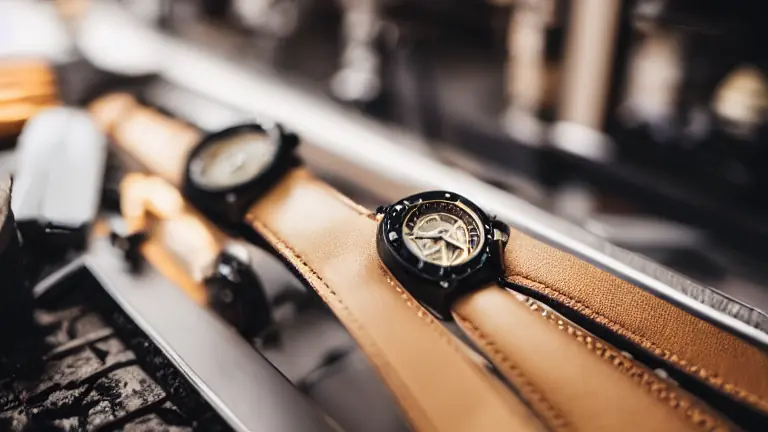
The Complete Guide to Watch Strap Selection, Fit and Care
The Complete Guide to Watch Strap Selection, Fit and Care
This post contains affiliate links. We may earn a commission if you purchase through our links, at no extra cost to you. As an Amazon Associate, I earn from qualifying purchases.
Which watch strap should you buy: leather for the office, rubber for summer, or nylon for a daily watch that gets knocked around? Start with the connection between the lugs. An expensive strap in the wrong width, length or attachment style is a worse purchase than an inexpensive one that fits correctly.
This guide compares five named options and explains how to choose between them. It is a specification-based buying guide, without hands-on testing; live stock and checkout prices have not been checked. The focus is practical: secure attachment, comfortable adjustment and materials suited to how you wear your watch.
What should you look for when buying a watch strap?
Choose a watch strap by matching its lug width, attachment system and usable length to your watch and wrist. Then select a material suited to water exposure and clothing. Check buckle placement, adjustment spacing and spring-bar clearance before paying; these details determine comfort and security more reliably than price.
The five factors that matter before you spend
1. Lug width and attachment type
Lug width is the internal distance between the lugs, measured where the spring bar sits. Common widths include 18mm, 20mm and 22mm, but 19mm and 21mm are legitimate sizes. Measure with calipers or consult the specification for your exact watch reference.
A 20mm strap belongs in a 20mm opening. Forcing a 22mm strap into it can distort the material and prevent the spring-bar tips from seating. An 18mm strap in that same opening leaves lateral movement and exposed bar.
Width alone does not establish compatibility. Integrated bracelets, proprietary connectors, curved ends and unusually positioned spring-bar holes can all prevent an apparently correct strap from fitting. A quick-release lever makes installation easier; it does not make the attachment universal.
2. Length, thickness and buckle position
Two straps can share a 20mm lug width and fit completely different wrists. Check the lengths of both pieces, the usable wrist range and whether those measurements include the buckle.
A listing marked 120/80mm normally describes the long and short sections. It does not mean a 200mm wrist will fit: the watch head contributes length, while overlap at the buckle consumes it. Published wrist ranges are more useful than adding the two pieces together.
Thickness also matters. A padded leather strap can suit a substantial chronograph but crowd the lugs of a slim dress watch. A pass-through strap adds material beneath the caseback, potentially making a watch that already measures 13mm thick less cooperative under a cuff.
3. Material and exposure to water
Leather, silicone, vulcanized rubber and woven nylon behave differently. Leather generally suits formal wear; silicone is flexible and easy to rinse; rubber formulations vary in firmness and feel; nylon offers low weight and broad adjustment.
Keep strap durability separate from the watch’s water resistance. A water-tolerant strap does not increase a case rating from 50m to 100m. Conversely, a watch rated to 200m can still have a leather strap that deteriorates through repeated soaking.
For regular swimming, prioritize a suitable rubber or silicone strap, sound hardware and the watch manufacturer’s operating guidance. Chlorine, salt, heat and sunscreen remain relevant even when the material tolerates water.
4. Adjustment and security
An adjustable buckle should let the watch stay stable without compressing your wrist. Hole spacing matters: two otherwise similar straps may place you between sizes on one and comfortably within range on the other.
For a loose watch strap, first identify the cause. The strap may be too long, the adjustment holes too widely spaced, or the watch head too heavy for a soft, narrow band. Tightening excessively can conceal the underlying mismatch while making the crown dig into your wrist.
Check the buckle tongue, keepers and spring bars as a system. Strong strap material cannot compensate for a damaged spring bar or a buckle tongue that barely engages its hole.
5. Color and finish
Black, medium brown and dark blue are useful starting points. Black leather works readily with formal clothing; brown leather softens a polished case; dark nylon or rubber suits casual wear without drawing attention away from the dial.
Match hardware finish where practical. A bright polished buckle on a heavily brushed tool watch can look disconnected, although exact matching is a preference rather than a functional requirement.
Inspect construction before paying extra for presentation. Consistent stitching, clean hole edges, secure keepers and clearly stated dimensions tell you more than elaborate packaging.
Five watch straps worth comparing
The dimensions below describe selected configurations, not every version offered under each product name. Check the individual listing before ordering. Prices are omitted because material, width, hardware and regional taxes can change the total substantially.
| Product | Key specifications and configuration discussed | Best use | Main compromise |
|---|---|---|---|
| BARTON Elite Silicone Watch Band | Silicone; selected 20mm quick-release version; buckle adjustment | Casual wear, exercise and frequent strap changes | Flexible material may offer insufficient support for a heavy watch |
| HIRSCH DUKE | Leather with an embossed alligator-style surface; selected 20mm version | Office and formal wear | Less suitable for repeated soaking than rubber or silicone |
| Crown & Buckle Supreme NATO | Woven nylon pass-through construction; selected 20mm version | Casual and field-watch use | Adds material beneath the case |
| Bonetto Cinturini Model 324 | Rubber; selected 20mm version; conventional buckle | Warm weather and water-oriented use | Fit depends on length, hole position and case clearance |
| Amazfit 22mm Silicone Strap | Silicone; nominal 22mm attachment width | Compatible Amazfit watches used for exercise and daily wear | Compatibility must be confirmed for the exact watch model |
BARTON Elite Silicone Watch Band: the practical everyday choice
The BARTON Elite Silicone Watch Band is a sensible starting point for someone who wants a flexible, washable strap with quick-release attachment. The selected 20mm version suits watches with compatible straight lugs and conventional spring-bar geometry.
Its strongest argument is convenience. Silicone avoids the drying routine associated with wet leather, while quick-release levers make switching between work and exercise straps straightforward. A black version is an easy match for a steel case and a legible sports dial.
The compromise is support. A soft strap can allow a heavy watch head to move unless the fit is close. Silicone can also collect lint, and sustained skin contact in hot weather may feel clammy. Choose it for flexibility and cleaning convenience, then assess whether its length and adjustment holes suit your wrist.
HIRSCH DUKE: the formal-wear option
The HIRSCH DUKE uses leather with an embossed alligator-style surface. That distinction matters: an embossed pattern should not be mistaken for an exotic-leather specification. Its restrained appearance suits a dress watch, a small seconds dial or a polished case worn under a shirt cuff.
In a selected 20mm configuration, consider both the lug-end thickness and the taper toward the buckle. A strap that becomes narrower toward the clasp can make a watch feel visually lighter, while substantial padding can overwhelm a thin case.
The HIRSCH DUKE makes sense when appearance with tailoring takes priority over swimming convenience. Follow its current care instructions, and give damp leather time to dry naturally. For daily exercise or repeated immersion, one of the silicone or rubber options is the more practical purchase.
Crown & Buckle Supreme NATO: the casual tool-watch choice
The Crown & Buckle Supreme NATO is a woven nylon pass-through option for a field watch or straightforward daily wearer. The selected 20mm size needs sufficient space between the spring bars and case to feed through without abrasion or excessive force.
This construction has a useful security characteristic: if one spring bar fails, a correctly fitted pass-through strap can help retain the watch through the other. It still depends on sound hardware and correct routing.
The trade-off is height and bulk. Material beneath the caseback lifts the watch, and surplus length needs somewhere to go. On a smaller wrist, the folded tail and keepers can become more noticeable than expected. Choose the Crown & Buckle Supreme NATO for washable casual wear; choose a two-piece strap if keeping the case low is the priority.
Bonetto Cinturini Model 324: the rubber alternative
The Bonetto Cinturini Model 324 is worth comparing when you want a rubber strap for warm weather and regular exposure to water. In a selected 20mm version, it offers a different material choice from the silicone options in this guide.
“Rubber” alone does not establish comfort. Length, flexibility, underside shape and adjustment position determine whether the case stays centered. Check those details before deciding that a rubber strap will solve an uncomfortable fit.
The Bonetto Cinturini Model 324 belongs on the shortlist for a conventional sports watch whose owner wants to leave leather out of the swimming routine. Its compromise is the same one that affects many aftermarket straps: correct nominal width does not guarantee clearance around the case or a useful buckle position.
Amazfit 22mm Silicone Strap: for a confirmed compatible watch
The Amazfit 22mm Silicone Strap is the relevant choice here for an Amazfit owner seeking a silicone replacement. The 22mm designation describes attachment width; it does not establish compatibility with every Amazfit watch or every other watch using that nominal width.
For exercise, prioritize a secure fit that maintains the watch’s intended sensor contact without overtightening. Clean the strap after sweaty use and dry the skin underneath it. A watch that moves excessively may need a different adjustment position or strap length.
Check the compatibility information before choosing the Amazfit 22mm Silicone Strap at Amazfit (affiliate link). It earns consideration as a replacement for a confirmed compatible model; a traditional watch with unusual lug geometry needs its own fit assessment.
Matching a strap to Seiko, Citizen and Tissot watches
A Seiko 5 Watch Strap search covers many case designs and generations. Order against the exact watch reference, not the Seiko 5 family name. Confirm lug width, spring-bar requirements and clearance, particularly when replacing a bracelet with a thicker pass-through strap.
A Citizen Eco-Drive Watch Strap search presents a similar problem. Eco-Drive identifies the light-powered movement technology, while attachment designs vary. Some watches accept conventional straight-ended straps; others use shaped ends or proprietary arrangements. A listing that says “fits Citizen” is insufficient evidence.
For a Tissot Le Locle Watch Strap, begin with the exact case reference and decide whether you will retain the existing clasp. A replacement can fit the lugs yet fail to fit a deployant clasp because its buckle-end width or thickness differs.
Watch choice still comes first. Tool Watch or Dress Watch: Choosing Your Daily Driver provides context for deciding which kind of case your replacement strap needs to support. Once that choice is settled, Tool Watch vs. Dress Watch: Choosing the Daily Driver can frame the practical question of cuff clearance versus outdoor durability.
What to skip—and why
Skip any listing that omits width, length or attachment details. An attractive photograph cannot resolve an incompatible watch strap.
Avoid “universal fit” claims without dimensional support. Even the correct width can fail when a thick strap presses against the case or a quick-release bar cannot seat fully.
Treat vague material descriptions cautiously. “Premium leather” does not explain the outer material, lining or construction. Likewise, a poor quality watch strap may reveal itself through uneven holes, separating layers or loose stitching before its main material fails.
Skip leather as your only strap if your routine includes daily swimming. Also avoid buying an oversized strap simply because the color is appealing: difficulty adjusting a watch strap is often a sizing problem that extra holes will not properly solve.
Finally, retire damaged parts. A watch strap breaking at the spring-bar channel, a keeper splitting or a buckle hole tearing is a replacement signal. Glue and improvised stitching are poor safeguards for a watch you intend to keep wearing.
Buying advice: measure once, replace carefully
Before ordering, record lug width, current strap-piece lengths, buckle width and your preferred adjustment hole. Note whether the existing spring bars are conventional, quick-release or specialized. Photograph the attachment so you can compare it with the replacement listing.
Buy one suitable configuration first. Fit varies too much to justify ordering several colors before establishing that the length and buckle position work.
For watch strap replacement, work over a soft surface in good light. Protect polished lugs from tool slips. If the bracelet uses unfamiliar screws, collars or concealed releases, a competent watchmaker can prevent damage that costs more than the replacement strap.
After installation, confirm that both spring-bar tips are seated. Apply a gentle pull to each strap section while holding the watch safely over the work surface. Check that the buckle engages fully and both keepers retain the tail.
Watch strap care and maintenance should follow the material. Wipe leather and dry it away from direct heat. Clean rubber, silicone and nylon according to their manufacturers’ instructions, rinse away residue where appropriate, and allow everything to dry. Inspect attachment points and buckle holes whenever you change straps.
FAQ
How do I measure watch strap size?
Measure the internal lug spacing in millimeters, then check strap length separately. A 20mm width tells you how the strap attaches; it does not tell you which wrists it fits. Confirm buckle-end width if reusing a clasp.
Which watch strap material is best for everyday wear?
Silicone or suitable rubber is practical for sweat and water. Leather suits office and formal wear. Nylon works well for casual use when you accept its drying time and the added height of pass-through construction.
Why does my watch still move after I tighten the strap?
The watch head may be heavy, the strap too flexible, or the available holes poorly positioned for your wrist. Try a better length or closer adjustment increments. Excessive tightening can cause discomfort without keeping the case properly centered.
Can I reuse the original spring bars?
Possibly, if they are undamaged and match the new strap and watch. Check diameter, tip design and condition. Replace bent, corroded or unreliable bars with correctly specified parts; a random bar that compresses into place is not sufficient.
When should I replace a watch strap?
Replace it when cracks reach the attachment area, layers separate, holes tear, stitching fails or hardware becomes unreliable. Cosmetic aging alone is different from structural damage. Inspect the spring-bar channels and buckle area regularly rather than waiting for failure.
This article contains affiliate links. Case & Strap may earn a commission when you purchase through them, at no additional cost to you.
This article contains affiliate links. Case & Strap may earn a commission when you purchase through them, at no additional cost to you.
In this guide
- what to know about Best Bronze Case Watches Actually Worth Buying
- our notes on The Best Leather Strap Watches Under $500
- The Best Two-Tone Watches for Men
- what to know about The Best Aftermarket Watch Straps Under $100
- Best Watch Tool Kits for Strap Changes and Light Maintenance
- our notes on Best Watch Tools for At-Home Maintenance Under $100
- a closer look at How to Change a Watch Strap at Home
- what to know about Leather vs. Rubber vs. NATO Watch Straps
Related Articles
- The Best Beginner Automatic Watches in 2026: An Honest, Hands-On Buyer's Guide
- Seiko Presage Cocktail Time review: the affordable dress watch that punches up
- The Best Sapphire Crystal Watches Under $500: A Hands-On Buyer's Guide
- Seiko vs Citizen: The Ultimate Head-to-Head Watch Brand Comparison
- Leather vs. Rubber vs. NATO Watch Straps: The Ultimate Buyer's Guide
Where to Buy
- BARTON Elite Silicone Watch Band on Amazon
- HIRSCH DUKE on Amazon
- Crown & Buckle Supreme NATO on Amazon
- Bonetto Cinturini Model 324 on Amazon
- Amazfit 22mm Silicone Strap on Amazon
- Watch Gang
- Amazfit
Affiliate links: as an Amazon Associate and partner of the stores above we earn from qualifying purchases.